
Welcome to Ranthambore National Park
Welcome to Ranthambore National Park
Ranthambore National Park is one of India’s most famous tiger reserves, known for its rich wildlife, royal heritage, and thrilling jungle safaris. your trusted platform for booking Gypsy Safari, Canter Safari, and Ranthambore Tour Packages at the best priceing.
Our Services
Chambal Safari Booking
Ranthambore Sanctuary

Tour Packages
Hotel Booking
Ranthambore Safari Ticket Prices 2025-26
Jeep Safari Price
Jeep safaris are a popular way to explore Ranthambore Tiger Reserve. Each Jeep can comfortably seat up to 6 passengers. A one-zone permit allows you to enjoy a 3.5-hour safari, available in both morning and afternoon shifts, covering any zone from 1 to 10.
For Indian tourists: ₹1,350 per person per safari (government price, excluding service charge and GST)
For foreign tourists: ₹2,500 per person per safari (government price, excluding service charge and GST)
Canter Safari Price
Canter safaris are a budget-friendly option for wildlife lovers. These open-roof canters can accommodate up to 20 passengers. The one-zone permit for Canter Safari also lasts 3.5 hours, available in morning and afternoon shifts, and covers any zone from 1 to 10.
- For Indian tourists: ₹815 per person per safari (government price, excluding service charge and GST)
- For foreign tourists: ₹2,000 per person per safari (government price, excluding service charge and GST)
Ranthambore Jungle Safari Timing
Safari timings at Ranthambore Sanctuary change with the seasons, so it’s best to check the schedule before planning your visit. Below are the usual timings for morning and evening safaris throughout the year:
| Month | Morning Safari | Evening Safari |
|---|---|---|
| 1st Oct to 31st Oct | 6:30 AM – 10:00 AM | 2:30 PM – 6:00 PM |
| 1st Nov to 31st Jan | 7:00 AM – 10:30 AM | 2:00 PM – 5:30 PM |
| 1st Feb to 31st March | 6:30 AM – 10:00 AM | 2:30 PM – 6:00 PM |
| 1st April to 15th May | 6:00 AM – 9:30 AM | 3:00 PM – 6:30 PM |
| 16th May to 30th June | 6:00 AM – 9:30 AM | 3:30 PM – 7:00 PM |
| Location | Sawai Madhopur, Rajasthan, India |
| Established | Wildlife Sanctuary in 1955, Tiger Reserve under Project Tiger in 1973, National Park in 1980. |
| Total Area | 1,334 km2 (515 sq mi) |
| Major Species Found in the Park | Royal Bengal Tigers, Leopards, Sloth Bears, Striped Hyenas, Sambar deer, Jackals, Indian Foxes, Crocodiles etc. |
| Best Time to Visit Ranthambore | October to June |
| Safari Types | Jeep & Canter Safari |
| Safari Timings | Morning & Afternoon Safari |
| Other Major Attractions Inside the Ranthambore Park | Ranthambore Fort, Trinetra Ganesha Temple & Lakes |
| Nearest Railway Station | Sawai Madhopur Railway Station |
| Nearest Airport | Jaipur International Airport |
| Safari Zones in Ranthambore | 10 Safari Zones |
| Ranthambore’s Climate | Summers (April to June) are hot and dry, winters (October to March) are pleasant |
| Bird Species Found in Ranthambore | Over 270 species of birds are found in Ranthambore |
Ranthambore National Park is not just about tigers — it’s a vibrant ecosystem full of diverse plants, birds, and animals. The park is located on the edge of the Thar Desert, so the climate is mostly dry, which gives rise to its dry deciduous forests.
Flora (Plant Life)
Ranthambore has around 300 species of plants, most of which are well adapted to dry conditions. The landscape includes rocky hills, open grassy meadows, lakes, plateaus, and narrow valleys, all of which support different plant communities.
The most common tree you’ll spot is the Dhok tree (Anogeissus pendula), which covers large parts of the forest.
Other plants like banyan trees, pipal, neem, and acacia also thrive here, adding to the greenery.
Fauna (Wildlife)
Ranthambore is home to a wide range of wild animals, making it one of the top wildlife destinations in India.
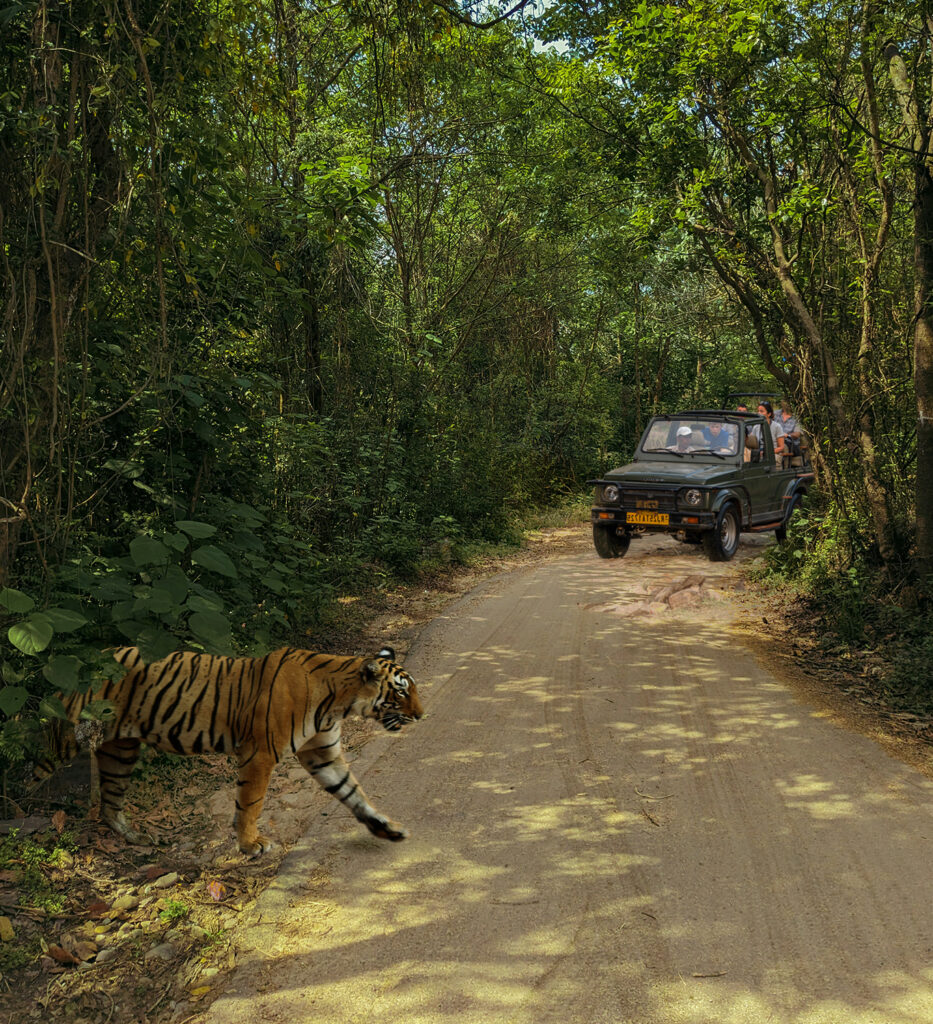
Of course, the Royal Bengal Tiger is the star of the park, and spotting one in the wild is an unforgettable experience.
Alongside tigers, you can also find leopards, jackals, caracals, jungle cats, and hyenas.
Large herbivores like sambars, chitals (spotted deer), nilgai (blue bull), wild boars, and chinkaras are commonly seen grazing in the open fields.
The park is also rich in birdlife, with over 300 species of birds including peacocks, parakeets, treepies, owls, eagles, and kingfishers, making it a paradise for bird watchers.
The lakes and water bodies attract crocodiles, turtles, and various water birds throughout the year.
Ranthambore National Park is divided into 10 safari zones, each offering a unique wildlife experience.
Zones 1–5 are the most popular, with frequent tiger sightings and lush surroundings. Zone 3 stands out for its stunning lakes like Padam Talao and Rajbagh Lake — scenic spots where tigers are often seen roaming.
Zones 6–10 are less crowded and open during the monsoon months (July to September). These zones let you experience the park’s beauty in a more serene, green atmosphere.
To avoid last-minute hassles, it’s best to book your safari online. Reservations open 90 days in advance, giving you early access to your preferred zone and timing.
Ranthambore National Park is not just about tigers — it’s a vibrant ecosystem full of diverse plants, birds, and animals. The park is located on the edge of the Thar Desert, so the climate is mostly dry, which gives rise to its dry deciduous forests.
Flora (Plant Life)
Ranthambore has around 300 species of plants, most of which are well adapted to dry conditions. The landscape includes rocky hills, open grassy meadows, lakes, plateaus, and narrow valleys, all of which support different plant communities.
The most common tree you’ll spot is the Dhok tree (Anogeissus pendula), which covers large parts of the forest.
Other plants like banyan trees, pipal, neem, and acacia also thrive here, adding to the greenery.
Fauna (Wildlife)
Ranthambore is home to a wide range of wild animals, making it one of the top wildlife destinations in India.
Of course, the Royal Bengal Tiger is the star of the park, and spotting one in the wild is an unforgettable experience.
Alongside tigers, you can also find leopards, jackals, caracals, jungle cats, and hyenas.
Large herbivores like sambars, chitals (spotted deer), nilgai (blue bull), wild boars, and chinkaras are commonly seen grazing in the open fields.
The park is also rich in birdlife, with over 300 species of birds including peacocks, parakeets, treepies, owls, eagles, and kingfishers, making it a paradise for bird watchers.
The lakes and water bodies attract crocodiles, turtles, and various water birds throughout the year.